Recruiter's Guide to Screening 1,000+ Resumes Efficiently
 By Wisedoc | Published on July 6, 2026 | 10 min read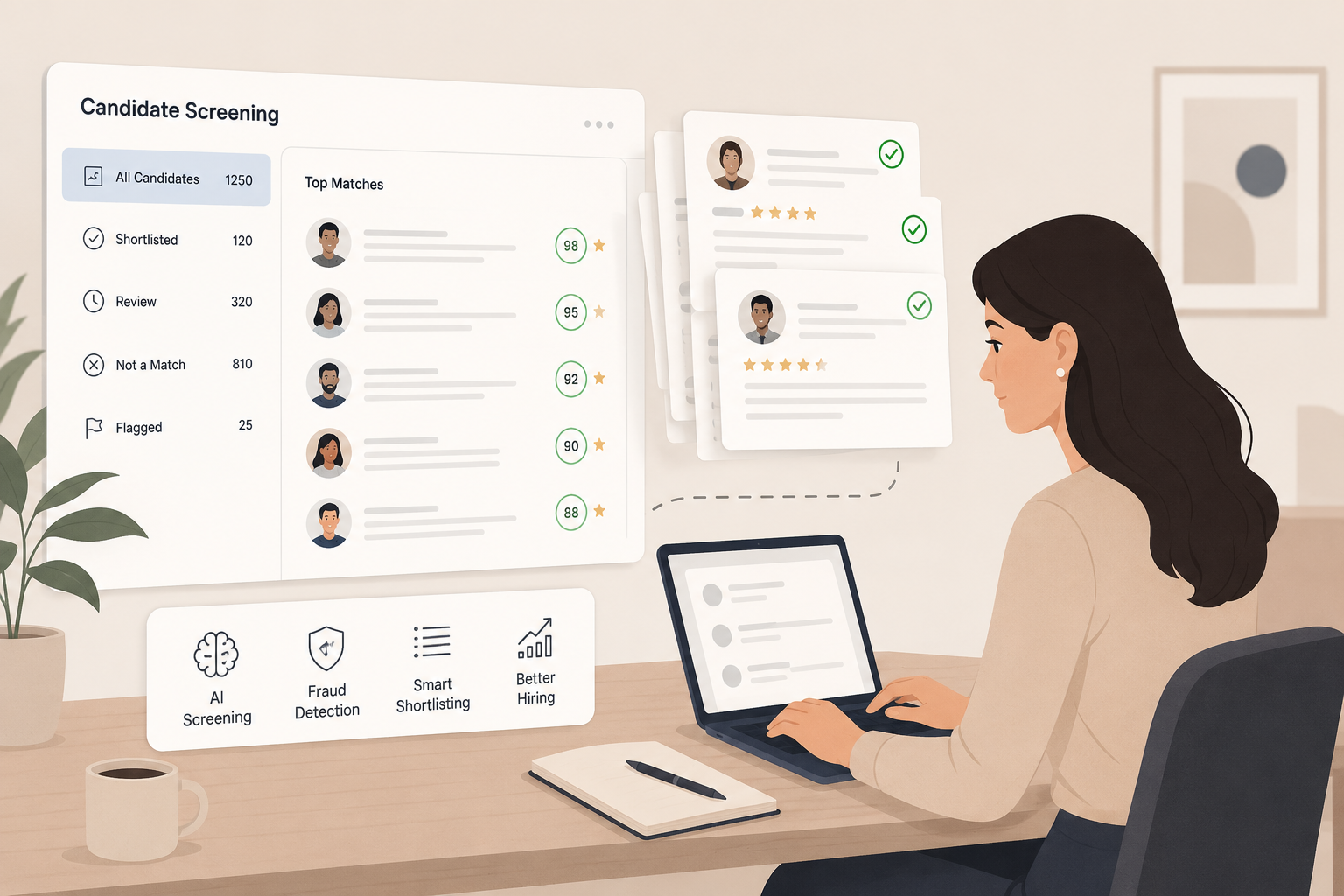
Hiring at scale has never been easy. Whether you're recruiting for healthcare, IT, finance, or high-volume roles, reviewing hundreds or even thousands of resumes can quickly overwhelm even experienced recruiters.
The challenge isn't just speed. It's finding qualified candidates without missing top talent, while filtering out irrelevant applications, fake resumes, and keyword-stuffed profiles.
This guide explains practical strategies recruiters can use to screen 1,000+ resumes faster while maintaining quality throughout the hiring process.
Why Traditional Resume Screening Breaks Down
Manual resume screening was designed for smaller applicant pools. Today's hiring landscape is different.
- Hundreds of applications arrive within hours of posting a job.
- Many resumes are optimized with keywords rather than genuine skills.
- Recruiters spend valuable time reading candidates who don't meet basic requirements.
- Qualified applicants often wait too long for a response.
As hiring volume increases, manual screening becomes one of the biggest bottlenecks in recruitment.
Step 1: Define Clear Screening Criteria Before Reviewing Resumes
Before opening the first application, identify your must-have qualifications.
- Required technical skills
- Years of experience
- Industry background
- Certifications
- Location or work authorization
- Education requirements
Having standardized criteria reduces inconsistency and speeds up decision-making.
Step 2: Prioritize Skills Over Keywords
Many applicants optimize resumes for Applicant Tracking Systems (ATS) by repeating keywords. Unfortunately, keyword density doesn't always reflect actual expertise.
Instead of simply matching words, recruiters should evaluate:
- Projects completed
- Relevant achievements
- Career progression
- Practical experience
- Business impact
This approach improves candidate quality while reducing false positives.
Step 3: Detect Resume Fraud Early
Resume fraud continues to rise across multiple industries.
Common warning signs include:
- Inflated job titles
- Unrealistic skill combinations
- Employment timeline inconsistencies
- Duplicate resume content
- Keyword stuffing
Identifying these issues during initial screening saves significant interview time later.
Step 4: Automate Repetitive Screening Tasks
Recruiters should spend their time evaluating people not manually sorting documents.
Modern AI-powered screening tools can automatically:
- Rank resumes by job fit
- Extract candidate information
- Highlight missing qualifications
- Identify potential fraud
- Generate candidate summaries
- Shortlist top applicants
Automation reduces repetitive work while allowing recruiters to focus on candidate engagement.
Step 5: Create a Consistent Resume Review Process
Consistency improves hiring quality across teams.
A structured workflow may include:
- Remove clearly unqualified applicants.
- Score remaining resumes using predefined criteria.
- Review AI-ranked candidates.
- Verify suspicious applications.
- Schedule interviews for top matches.
Following the same process for every role reduces bias and improves hiring efficiency.
Common Mistakes Recruiters Should Avoid
- Relying only on keyword matches.
- Ignoring transferable skills.
- Manually reviewing every application.
- Skipping resume verification.
- Changing evaluation criteria midway through screening.
How AI Helps Recruiters Scale Hiring
Artificial intelligence isn't replacing recruiters it's removing repetitive administrative work.
By automating resume analysis, recruiters can:
- Review applications significantly faster.
- Identify qualified candidates sooner.
- Reduce manual screening time.
- Improve hiring consistency.
- Spend more time interviewing and building relationships with candidates.
Final Thoughts
Screening 1,000+ resumes doesn't have to mean sacrificing hiring quality. A structured process, standardized evaluation criteria, fraud detection, and AI-assisted screening enable recruiters to move faster while making better hiring decisions.
As recruitment volumes continue to grow, organizations that combine recruiter expertise with intelligent automation will be better equipped to identify top talent efficiently and consistently.
Good or bad, we'd love to hear your thoughts. Find us on X or connect with us on LinkedIn.
Here are some related articles you may find interesting
How Recruiters Can Move From Keyword Matching to Skill-Based Screening
Learn how recruiters can move beyond keyword matching by evaluating candidate skills, experience, responsibilities, context, and evidence to build more accurate and effective shortlists.
How Healthcare Staffing Agencies Can Build Faster Candidate Pipelines
Healthcare staffing agencies can build faster candidate pipelines with structured sourcing, AI-assisted screening, candidate ranking, credential readiness, automated follow-ups, and streamlined client submissions.
How Recruiters Can Identify Suspicious Candidate Behavior Before the Interview
Recruiters can identify suspicious candidate behavior before interviews by checking employment timelines, credentials, profile inconsistencies, duplicate records, skill mismatches, and other potential risk signals.
From Resume Review to Candidate Ranking: How AI Makes Hiring Decisions Faster
AI candidate ranking helps recruiters move beyond manual resume review by analyzing job requirements, comparing candidate profiles, and prioritizing relevant applicants faster.