Fake Job Applicant Detection: How a Layered AI Model Stops Hiring Fraud
 By Wisedoc | Published on June 29, 2026 | 15 min read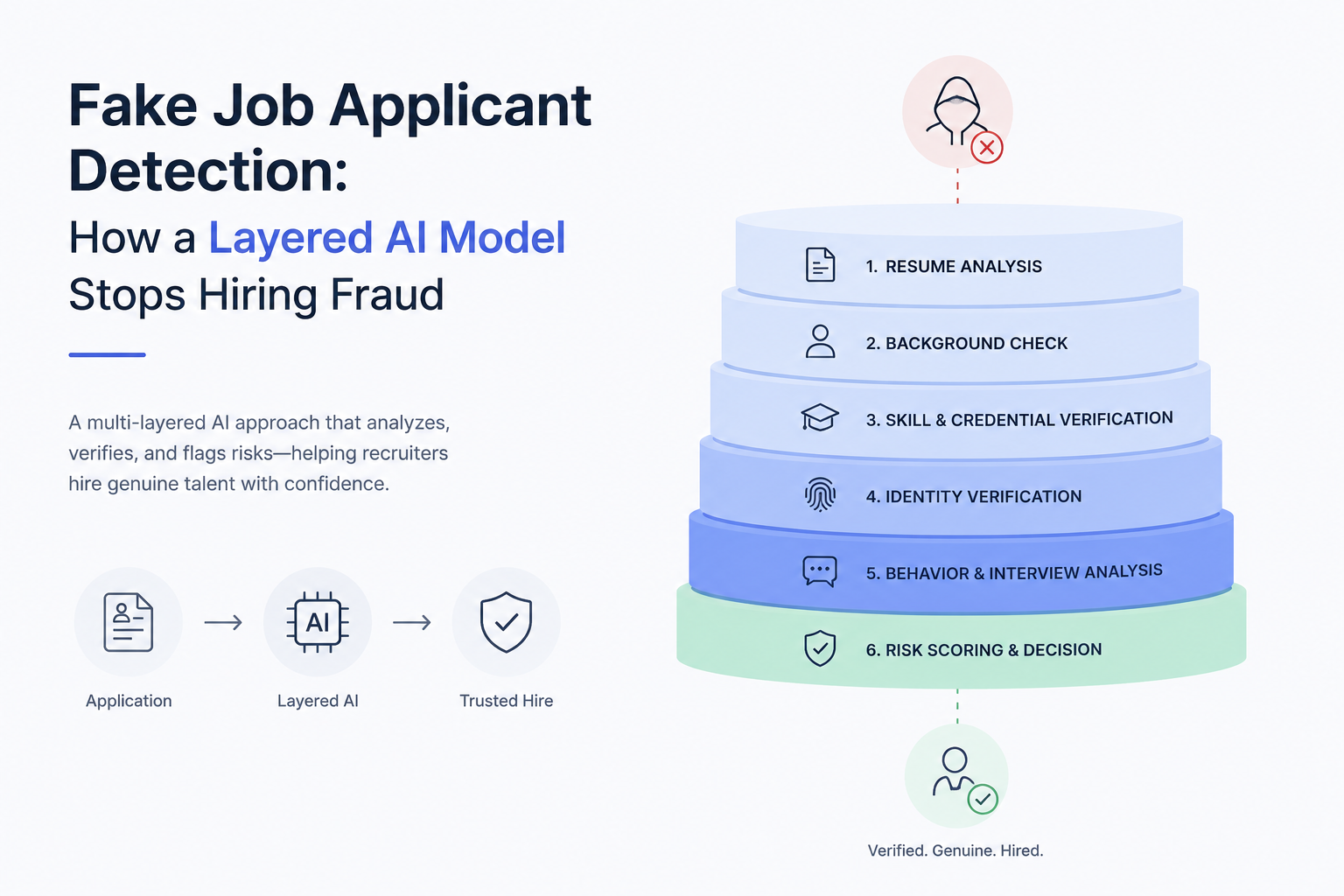
Fake Job Applicant Detection: How a Layered AI Model Stops Hiring Fraud
Hiring fraud has evolved rapidly in the age of artificial intelligence. Recruiters today are no longer dealing only with exaggerated resumes or embellished job titles they are increasingly encountering AI-generated resumes, fabricated work histories, identity impersonation, and even candidates who use AI assistance during interviews. These sophisticated tactics make it difficult to separate genuine talent from fraudulent applicants using traditional hiring methods.
A layered AI detection model provides a modern solution by evaluating candidates through multiple verification stages instead of relying solely on resume screening. Rather than making hiring decisions based on a single document, the model analyzes numerous signals across the recruitment process to identify inconsistencies and potential fraud before a candidate progresses to later hiring stages.
Why Traditional Resume Screening Falls Short
Conventional recruitment typically begins with keyword matching and manual resume review. While these methods help filter large applicant pools, they cannot reliably detect sophisticated hiring fraud. Modern AI tools enable applicants to create highly optimized resumes tailored to specific job descriptions, making nearly every application appear qualified at first glance.
Because recruiters often review hundreds or thousands of applications for a single role, subtle inconsistencies can easily go unnoticed. Manual screening is time-consuming, subjective, and increasingly ineffective against AI-assisted deception.
What Is a Layered AI Detection Model?
A layered AI detection model combines multiple verification techniques throughout the hiring journey. Instead of depending on one checkpoint, each layer evaluates different aspects of candidate authenticity. The combined insights create a more reliable assessment of whether a candidate is genuine or potentially fraudulent.
Layer 1: Intelligent Resume Analysis
The first layer evaluates resumes using natural language processing and machine learning. Rather than simply matching keywords, AI examines writing patterns, employment progression, skill relevance, project descriptions, and overall consistency.
Potential indicators include unusually generic language, repetitive AI-generated phrasing, unrealistic career growth, inconsistent employment dates, and skills that do not align with previous roles.
Layer 2: Career Timeline Validation
A candidate's employment history is analyzed for logical consistency. AI identifies overlapping employment periods, unexplained gaps, improbable promotions, duplicate work histories, or experience levels that appear inconsistent with industry norms.
This layer helps recruiters identify profiles requiring additional verification without automatically rejecting legitimate candidates.
Layer 3: Skill and Experience Correlation
Listing a technical skill does not necessarily demonstrate expertise. AI compares claimed skills with previous job responsibilities, years of experience, certifications, and project history to identify unusual discrepancies.
For example, a candidate claiming senior-level expertise in multiple complex technologies despite limited professional experience may warrant further evaluation.
Layer 4: Identity Verification
Identity verification ensures that the individual applying for a role is the same person participating throughout the hiring process. This layer helps reduce identity impersonation, proxy interviews, and other forms of candidate substitution that have become increasingly common in remote recruitment.
Layer 5: Behavioral Pattern Analysis
AI evaluates behavioral signals throughout the recruitment journey. Application timing, profile consistency, response behavior, communication patterns, and assessment interactions can reveal anomalies that deserve closer inspection.
Behavioral analysis adds another level of confidence without relying on any single indicator.
Layer 6: Interview Consistency
Candidate responses are evaluated for consistency across multiple interview stages. Significant differences between resume claims, assessment results, and interview performance may indicate inflated experience or potential misrepresentation.
Rather than replacing recruiters, AI highlights inconsistencies that human interviewers can investigate further.
Layer 7: Fraud Risk Scoring
The final layer combines insights from every previous verification stage into a comprehensive fraud risk assessment. Instead of making automatic hiring decisions, the model prioritizes candidates requiring additional review while allowing recruiters to focus on qualified applicants with greater confidence.
Benefits of a Layered AI Detection Model
- Improves hiring accuracy through multiple verification stages.
- Reduces the risk of fraudulent hires.
- Identifies suspicious applications earlier in the recruitment process.
- Supports recruiters with data-driven decision making.
- Decreases manual screening time for large applicant volumes.
- Enhances confidence in remote hiring workflows.
- Provides a scalable approach for enterprise recruitment.
Why Multiple Layers Matter
No single indicator can determine whether a candidate is genuine. A well-written resume may still contain fabricated experience, while an inconsistent interview does not always indicate fraud. Layered detection reduces reliance on isolated signals by combining resume analysis, career validation, behavioral insights, identity verification, and interview consistency into one comprehensive evaluation framework.
This approach improves detection accuracy while minimizing false positives, allowing recruiters to make informed decisions based on multiple data points rather than assumptions.
Conclusion
Hiring fraud continues to evolve as artificial intelligence becomes more accessible. Organizations that rely solely on traditional resume screening face increasing risks from AI-generated resumes, identity fraud, and sophisticated candidate deception.
A layered AI detection model strengthens the hiring process by evaluating candidates across multiple verification stages instead of depending on a single checkpoint. By combining intelligent resume analysis, career validation, skill correlation, identity verification, behavioral analysis, interview consistency, and fraud risk scoring, recruiters gain a more complete understanding of candidate authenticity.
As recruitment continues to move toward digital-first hiring, layered AI detection represents a practical and scalable approach to protecting organizations from hiring fraud while helping recruiters focus on identifying qualified, genuine talent.
Good or bad, we'd love to hear your thoughts. Find us on X or connect with us on LinkedIn.
Here are some related articles you may find interesting
How Recruiters Can Move From Keyword Matching to Skill-Based Screening
Learn how recruiters can move beyond keyword matching by evaluating candidate skills, experience, responsibilities, context, and evidence to build more accurate and effective shortlists.
How Healthcare Staffing Agencies Can Build Faster Candidate Pipelines
Healthcare staffing agencies can build faster candidate pipelines with structured sourcing, AI-assisted screening, candidate ranking, credential readiness, automated follow-ups, and streamlined client submissions.
How Recruiters Can Identify Suspicious Candidate Behavior Before the Interview
Recruiters can identify suspicious candidate behavior before interviews by checking employment timelines, credentials, profile inconsistencies, duplicate records, skill mismatches, and other potential risk signals.
From Resume Review to Candidate Ranking: How AI Makes Hiring Decisions Faster
AI candidate ranking helps recruiters move beyond manual resume review by analyzing job requirements, comparing candidate profiles, and prioritizing relevant applicants faster.